You've mastered the technical side. Leading people is a different job
Executive coaching for founders and senior managers who need their teams to perform when the pressure is on
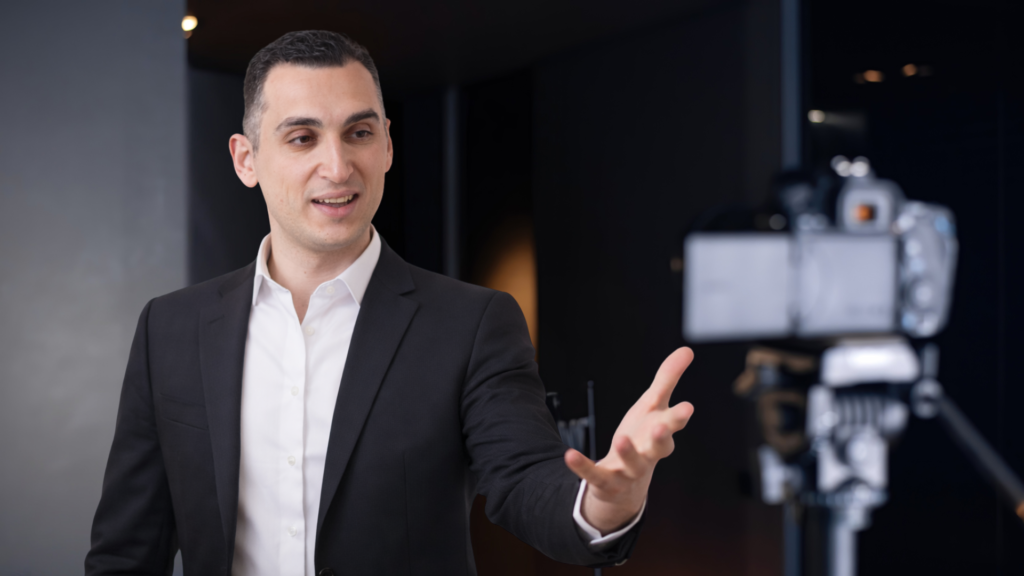
About Modar
Leadership is a practice, not a personality, It can be built.
I work with executives and senior managers who’ve mastered the technical side of their role and discovered that leading people is a different discipline entirely. A decade leading teams in crisis zones taught me what holds under pressure and what doesn’t. Now I help leaders build the same thing deliberately.
FLAGSHIP PROGRAM
Leadership Under Pressure
A 90-day coaching engagement for leaders whose decisions carry weight
Most leadership training works in the classroom and evaporates in the room where it matters. The gap isn't knowledge, it's that pressure changes how people think, and nobody ever taught them to account for it. Leadership Under Pressure is built on the Pressure Layer framework: four distinct forces that degrade leadership decisions, and what to do about each one.
Time
Decisions arrive faster than the analysis you’d like to do. You learn to recognize which calls need more time and which are being delayed by discomfort rather than complexity.
Information
You never have the full picture and you’re accountable anyway. You build a method for deciding with gaps and for telling your team what you know, what you don’t, and what you’re betting on.
Emotion
Your state sets the room’s state. When you’re activated, your team reads it before you say a word. You learn to regulate under load rather than perform calm you don’t have.
Stakes
When consequences are real, most leaders either freeze or overcorrect. You develop the ability to hold a hard decision steady and to be held accountable for it without collapsing or defending.
Over 90 days, we work through all four, with a diagnostic at the start and a clear picture at the end of what changed.
What clients say
“A game changer in my career. He has the gift of making difficult things easy.”
Bruna de Kassia, Supply Chain Engineer
“Modar set up a personalised strategy for a high-level meeting I had scheduled with a CEO. I learned more in that half hour about approaching a managerial meeting than I have in decades of managing my business.”
James Taylor, Business owner
“His ability to tailor the coaching to the specific needs of each individual is remarkable.”
Abdulaziz AlFayyadh, General Manager, IT Infrastructure & Operations
Coaching Services
How We Can Work Together
"Leadership Under Pressure"
The flagship 90-day engagement.
The four pressures — time, information, emotional load, and stakes — are what separate leaders who hold from leaders who fracture. Over 90 days we work through each one: where it hits you specifically, what it costs your team, and what to build in its place. Starts with a diagnostic, ends with a clear read on what changed.
Best for: leaders in a role that outgrew their current approach.
Team Dynamics Workshops
The pressure framework, applied to your team in the room.
Real teamwork isn’t trust exercises. It’s whether people will disagree openly, hold each other accountable, and commit to a decision they argued against. These sessions take the Pressure Layer framework and work it directly against your team’s live dynamics — with the actual tensions in the room, not hypotheticals.
Best for: intact teams where the friction is known and nobody’s naming it.
Executive & 1-on-1 Coaching
Confidential work on the decisions that keep you up.
For leaders navigating a high-stakes transition, a specific relationship that isn’t working, or a pattern they can see but can’t shift. Sessions are private, direct, and built around what you actually bring rather than a fixed curriculum. Some engagements run three months, others longer — we set the arc together at the start.
Best for: founders and senior leaders who need a thinking partner, not a program.
Frequently Asked Questions
Have more questions? I’d be happy to discuss them during our discovery call.
Leadership Under Pressure
Is this just another motivational seminar?
No. Motivation fades in about a week. This is diagnostic work: we identify which of the four pressures, time, information, emotional load, stakes, is actually degrading your decisions, then build specific responses to each. You leave with changed behavior, not a changed mood.
Who is this designed for?
Leaders whose role has outgrown their current approach. Typically founders and senior managers running teams where their own decisions carry real consequences. It’s not built for first-time managers or for people whose organization is sending them.
We're already stretched. Will this take time away from real work?
Two hours every two weeks, over 90 days. The work is designed around decisions you’re already making, not hypothetical case studies, so what you bring to a session is your actual calendar, not extra preparation.
How do you measure whether it worked?
We start with a diagnostic that establishes where you are on each pressure. At the end of 90 days we run it again, alongside a review of specific decisions you handled differently.
What does it cost?
€5,000 for the full 90-day engagement, six sessions, the initial diagnostic, and direct access between sessions. For context, that’s roughly what one avoidable senior hire mistake costs in the first month.
What if I'm not sure this is the right time?
Then it probably isn’t. This works when there’s a live problem, a role transition, a team that isn’t performing, a decision pattern you can see and can’t change. If nothing is currently costing you, wait until something is.
Is what we discuss confidential?
Yes, absolutely, including when a company is paying. and in the case of the sponsor is your organization, they can only receive information like attendance and progress themes but nothing about what is shared during the sessions.
Team Dynamics Workshops
How is this different from a team-building day?
Team building produces a pleasant afternoon. This produces uncomfortable conversations that were already happening in private. We work with your team’s real tensions, in the room, with the people involved.
How many people, and how long?
Four to twenty-four participants (Groups of eight to twelve work best; the format adapts up to twenty-four.), delivered as a half day or a full day. Which format fits depends on team size and how much live tension there is to work through, we decide that together before booking.
Our team already gets along. Is there anything here for us?
Often the most, though not in the way people expect. Teams that get along frequently avoid disagreement, which means decisions get made in hallways instead of meetings. Politeness and alignment are not the same thing.
What if people won't speak openly in front of their manager?
That reluctance is itself a finding, and we design for it. Depending on what the team needs, that can mean individual conversations beforehand, anonymous input we use to build the session’s scenarios, or segments run with the manager out of the room. The goal isn’t one honest afternoon, it’s changing what’s sayable afterward.
Do you customize, or is it a fixed program?
The Pressure Layer framework is the structure; the content comes from your team. Before the session I meet with the leader and few of the team members to understand where the friction actually sits, then build the activities around what surfaces.
What does it cost?
Half day: €2,500 up to 8 participants · €3,500 for 9–16 · €4,500 for 17–24
Full day: €5,500 up to 8 · €7,000 for 9–16 · €9,000 for 17–24
Every engagement includes the pre-session conversations, a session built from what those surface, and a written summary of themes for the leader afterward.
Delivered on site across Europe and the Gulf, in Italian, English, or Arabic. For sessions outside northeast Italy, travel and accommodation are billed at cost and agreed before booking.
What happens after the workshop?
After the session, I meet with the leader for a 90-minute debrief: what surfaced, what the team is likely to revert to, and what to hold them to over the next quarter. The team gets the experience; the leader gets the map.
Executive & 1-on-1 Coaching
How is this different from the 90-day program?
Leadership Under Pressure follows a defined arc through four pressures. This is built entirely around what you bring, a transition, a relationship, a pattern you can’t shift. No fixed curriculum, and the length is set by the problem.
What actually happens in a session?
Ninety minutes, typically every two weeks, remote or in person depending on where you are. Starting with the outcome you want from the time. You bring a live situation, a decision you’re sitting on, a conversation that isn’t working, a pattern you keep repeating. We work it: what you’re seeing, what you’re missing, and what you’ll do differently before we speak again.
How long does an engagement run?
Typically three months, meeting every two weeks, six sessions. Some people work through one specific thing in that time; others stay longer because the questions keep getting better.
I've worked with a coach before and it didn't change anything. Why would this?
Fair, and it’s worth asking what happened. Coaching that stays in insight is entertainment. If you leave sessions feeling clearer but behaving identically, something is wrong with the method, you should expect specific commitments and to be held to them.
What's your background, why you?
Most of what I know about leading under pressure I learned in places where the consequences were immediate, a decade running humanitarian logistics in crisis zones, leading international teams where a bad decision cost more than a bad quarter.
That experience went through formal coach training at Erickson Coaching International, where I earned my ICF PCC credential. I’ve since coached over a thousand hours.
What does it cost?
€7,500 for a six-session engagement over three months. That includes the sessions, direct access between them, and the pre-engagement conversation where we define what we’re actually working on.
Continuing beyond the first three months is €1,400 per session, or €7,500 for a further six.
How do we know if we're a fit?
The discovery call is for exactly that. Thirty minutes, no pitch. If I don’t think I can help, I’ll say so and point you somewhere better.
No pressure, no pitch, just a conversation about where you are and where you want to be.
Prefer to write first? modar@modarkasoaa.com · I reply within 24 hours